What Are Business Ideas for Students Disbusinessfied: Top Ventures to Start Today
Starting a business as a student may seem daunting, but with the right mindset, determination, and a little creativity, it is possible to turn small ideas into sustainable ventures. What are business ideas for students disbusinessfied is a question many ambitious students ask, as they look to balance academics with building something meaningful that can generate income and professional experience. In the contemporary world, the possibilities are nearly limitless, spanning digital services, local solutions, and scalable online platforms.
The student years are unique—they provide access to resources, networks, and knowledge that are invaluable when launching a business. Universities and colleges often offer mentorship programs, incubators, and access to cutting-edge technology, giving students an advantage that traditional entrepreneurs might not have. Understanding the types of business ideas that align with a student’s schedule, interests, and financial constraints is crucial for long-term success.
Why Students Should Consider Entrepreneurship Early
Engaging in entrepreneurship while studying offers several advantages. First, it cultivates essential life skills such as time management, problem-solving, and leadership. Second, students gain practical experience that enhances their resumes and career prospects. In countries like the United States, student entrepreneurs are increasingly recognized for their contributions to innovation ecosystems, inspiring others to pursue similar ventures.
Additionally, starting small allows for learning without substantial risk. Many students experiment with low-capital ventures to understand the dynamics of supply, demand, marketing, and customer engagement. This iterative process is instrumental in creating resilient business acumen. In this regard, understanding what are business ideas for students disbusinessfied provides clarity on which ventures are feasible and profitable within a student’s timeframe.
Identifying Student-Friendly Business Opportunities
Student-friendly business ideas are typically those that require minimal capital, flexible time investment, and offer scalability. Here are several sectors where students can experiment and thrive:
Digital Services
With the internet permeating every aspect of daily life, digital services are among the most accessible and profitable avenues for students. Social media management, content creation, graphic design, and web development are skills many students already possess or can quickly learn. Freelancing platforms make it easier to connect with clients globally, allowing students to earn while building a portfolio.
Offering tutoring services online is another promising area. Many students excel in specific subjects and can leverage this expertise to provide personalized educational services. Additionally, creating online courses or educational content can generate passive income over time.
Local Solutions
Not all student ventures need to be online. Identifying gaps within local communities can lead to highly successful businesses. For instance, providing laundry services, organizing campus events, or delivering healthy snacks to students are low-investment opportunities. These services often benefit from word-of-mouth marketing and local networking, which is advantageous for students who might not yet have access to extensive advertising budgets.
E-commerce Ventures
E-commerce continues to grow globally, offering students opportunities to sell products with minimal overhead. Platforms such as marketplaces and social media storefronts enable students to start small, testing products before scaling. Popular student ventures in this space include handmade crafts, personalized merchandise, and fashion accessories. Understanding what are business ideas for students disbusinessfied in the context of e-commerce is vital because it helps students focus on products that resonate with a specific audience.
Leveraging Technology for Student Businesses
Technology has democratized entrepreneurship. Students today can build businesses using affordable software tools, cloud platforms, and automated systems. Mobile apps for service delivery, online payment systems, and customer relationship management tools make it easier for students to operate efficiently even while managing their academic workload.
Artificial intelligence and data analytics are emerging fields where students can carve out niches. For example, students proficient in AI can create tools that assist small businesses with inventory management, social media analytics, or personalized marketing campaigns. Such tech-driven businesses are not only profitable but also highly relevant in modern markets.
Financial Management for Student Entrepreneurs
One of the most important aspects of running a business as a student is financial management. Budgeting, cost tracking, and profit assessment are essential to ensure sustainability. Students should start with a clear business plan that outlines investment requirements, expected returns, and contingency plans.
Crowdfunding and microloans are accessible options for students who need initial capital. Many universities also have funds or competitions to support student startups. By learning to manage finances early, students prepare themselves for larger entrepreneurial ventures in the future.
Marketing Strategies for Student Businesses
Marketing is crucial, regardless of the type of business. For students, leveraging social media platforms like Instagram, TikTok, and LinkedIn is often more effective and cost-efficient than traditional advertising. Creating engaging content that resonates with a student demographic can rapidly increase visibility.
Networking within the campus and local community also provides organic growth opportunities. Partnering with other student entrepreneurs, participating in events, and using referral programs can enhance reach. Understanding what are business ideas for students disbusinessfied involves not only choosing a niche but also crafting strategies to connect with potential customers efficiently.
Balancing Academics and Entrepreneurship
Time management is arguably the biggest challenge for student entrepreneurs. Balancing classes, assignments, and social commitments with a business requires discipline. Prioritizing tasks, setting realistic goals, and delegating responsibilities when possible are strategies that help maintain academic performance while pursuing entrepreneurial goals. business guide disbusinessfied
Automation and outsourcing can significantly reduce workload. For example, using social media scheduling tools, hiring freelance graphic designers, or utilizing e-commerce fulfillment services allows students to focus on core business activities and academic success simultaneously.
Case Studies of Successful Student Entrepreneurs
Examining successful student entrepreneurs provides valuable insights into what works. For instance, many well-known startups originated from college dorm rooms or university labs. These ventures often began as small projects addressing a clear problem and scaled quickly due to their relevance and execution. In the United States, numerous student-led startups have received investment, proving that age and experience are not barriers when innovation meets opportunity.
These examples also underscore the importance of persistence. Not every idea will succeed immediately, and failure is often part of the learning curve. By experimenting with different approaches and understanding what are business ideas for students disbusinessfied, students can refine their strategies and discover sustainable business models.
Creative Business Ideas Tailored for Students
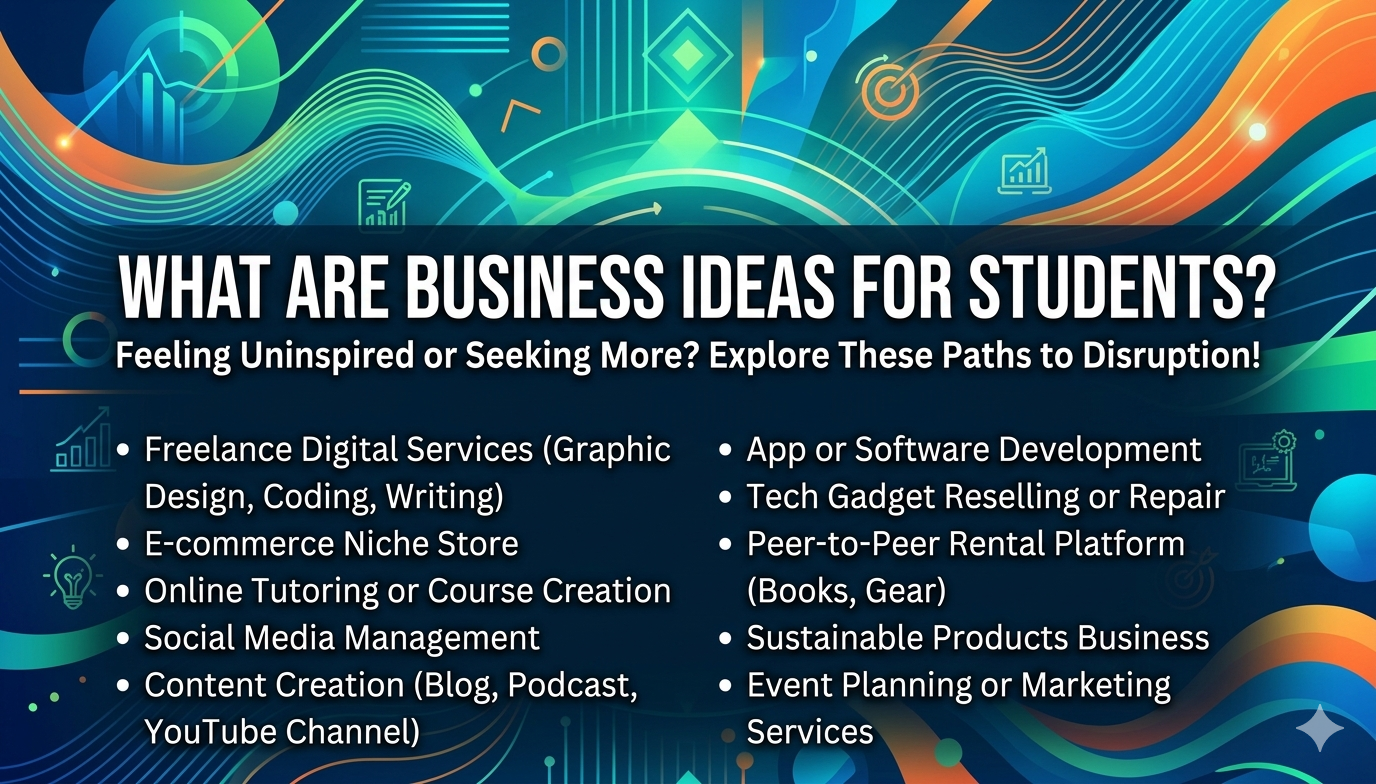
The following list highlights diverse and creative business ideas suitable for students. Each of these ventures is feasible, low-risk, and can be scaled over time:
- Freelance Writing and Content Creation: Ideal for students with strong writing skills. This includes blog posts, social media content, and copywriting services.
- Tutoring Services: Offering academic support in subjects where the student excels, either locally or online.
- Social Media Management: Managing social media accounts for small businesses, creating content, and growing engagement.
- Handmade Crafts and Art: Selling unique products such as jewelry, paintings, or custom accessories.
- Campus Delivery Services: Delivering food, stationery, or other essentials to students within the campus.
- Fitness Coaching: Offering personal training sessions, virtual workout plans, or wellness guidance.
- Photography and Videography: Providing professional-quality media for events, portfolios, or social media campaigns.
- Digital Marketing Services: SEO, email campaigns, and brand promotion for local businesses.
- E-commerce Reselling: Buying products in bulk and selling them online for a profit.
- App or Website Development: Leveraging coding skills to develop solutions for small businesses or peer clients.
Each idea allows students to explore their interests while gaining practical experience in business management. Focusing on what are business ideas for students disbusinessfied enables a more structured approach to selecting and executing these ventures effectively.
Overcoming Common Challenges
Student entrepreneurs face unique challenges, including limited capital, inexperience, and time constraints. To overcome these obstacles, students can:
- Start small: Focus on a niche product or service that requires minimal investment.
- Seek mentorship: Guidance from experienced entrepreneurs can prevent costly mistakes.
- Leverage university resources: Incubators, workshops, and competitions provide practical support.
- Prioritize learning: Accept that mistakes are part of the growth process.
- Maintain flexibility: Be ready to pivot if a business idea isn’t gaining traction.
Understanding what are business ideas for students disbusinessfied is crucial here because it ensures that students choose ventures aligned with their skills, interests, and available resources.
The Role of Networking and Collaboration
Building a business requires relationships. Networking helps students access clients, investors, and collaborators. Engaging with peers, attending industry events, and participating in online communities can provide insights and opportunities that accelerate growth.
Collaboration with other students can also expand capacity. For instance, a student with marketing skills can partner with a peer specializing in web development to launch a digital service. This synergy maximizes potential while sharing workload and resources.
Scaling Student Businesses
While initial ventures may be small, the potential for growth is significant. Students can scale by diversifying product offerings, reaching new customer segments, or expanding to online platforms. Subscription services, affiliate marketing, and partnerships with established businesses can transform modest student startups into sustainable enterprises.
Scaling requires strategic planning and disciplined execution. Maintaining quality, managing finances, and understanding customer feedback are all critical factors for long-term success. Recognizing what are business ideas for students disbusinessfied in a scaling context ensures that growth is sustainable and aligned with market needs.
Conclusion
Student entrepreneurship is a journey of creativity, resilience, and continuous learning. By exploring innovative ideas, leveraging technology, managing finances wisely, and balancing academics, students can build ventures that are both profitable and enriching. Understanding what are business ideas for students disbusinessfied provides a roadmap for selecting opportunities that are realistic and rewarding.
The advantages of starting a business as a student extend beyond financial gain. They include enhanced skills, networking opportunities, and the confidence to tackle future challenges. By acting on their ideas, students position themselves as proactive, capable, and visionary leaders.
Whether it’s a digital service, local solution, or e-commerce venture, the key is to start, experiment, and learn. With perseverance, creativity, and strategic thinking, students can transform small ideas into successful businesses that leave a lasting impact. In the United States and globally, student entrepreneurs continue to redefine what is possible, proving that age is no barrier to innovation. By carefully considering what are business ideas for students disbusinessfied, students today are preparing to become the successful business leaders of tomorrow.